
Keyless Commercial Door Locks: Market Trends and Buyer Insights
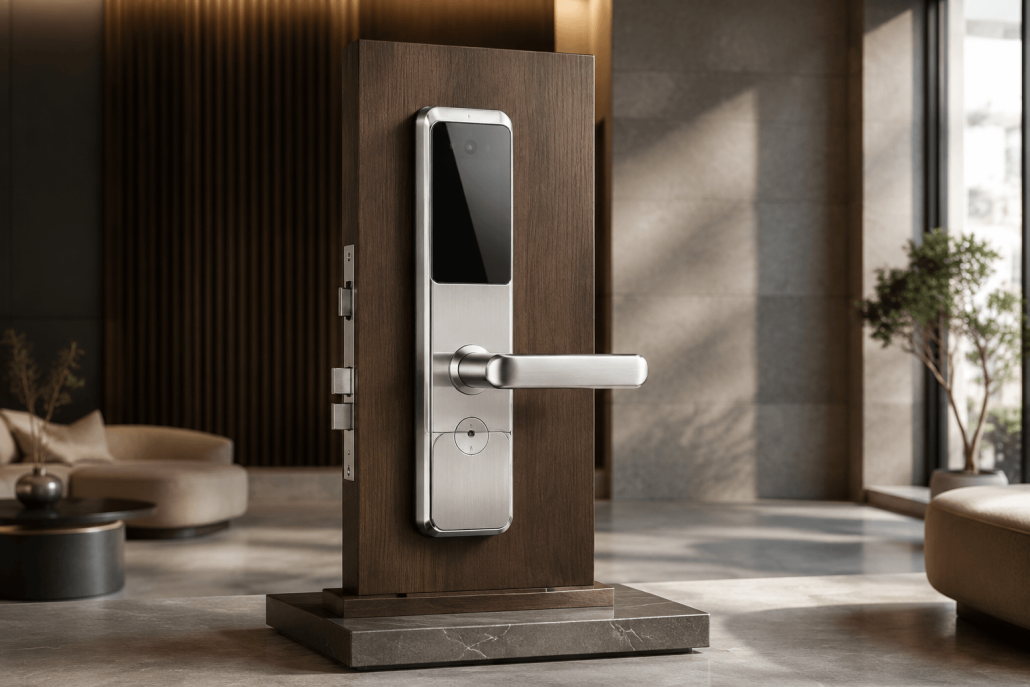
The global smart lock market is projected to reach $8.13 billion by 2026, driven by growing demand for secure and convenient access solutions (Fortune Business Insights, 2023). Keyless commercial door locks are at the forefront of this shift, offering businesses enhanced security, operational efficiency, and seamless integration with smart ecosystems. As smart home penetration in developed markets is expected to surpass 60% by 2026 (Statista, 2024), B2B buyers are increasingly prioritizing innovative access control solutions tailored to diverse applications.
Why Demand for Keyless Commercial Door Locks is Surging
For B2B buyers, selecting the right keyless commercial door locks supplier is critical. KEYPLUS offers certified smart lock solutions with TTLock/Tuya integration, OEM/ODM flexibility, and competitive MOQ. Learn more below.
Keyless commercial door locks are revolutionizing access control in industries like hospitality, retail, and property management. The market is growing at a CAGR of 18.4%, reflecting strong adoption across residential, rental, and project-based applications (MarketsandMarkets, 2023). For example, hotels are transitioning to RFID card and biometric locks to improve guest experiences. Similarly, apartment complexes are adopting smart locks integrated with Tuya or TTLock platforms for centralized management.
Moreover, 73% of B2B buyers prioritize app integration and remote access when sourcing smart locks (McKinsey, 2023). This trend highlights the importance of compatibility with smart home platforms and mobile applications. Keyless solutions enable property managers to issue temporary PINs and monitor audit trails in real time, reducing operational friction.
KEYPLUS, a leader in smart lock manufacturing, offers OEM and ODM capabilities for distributors and project buyers. Their product range includes biometric locks, fingerprint door locks, and hotel-specific solutions tailored to varying needs.
Key Features B2B Buyers Evaluate in a Smart Lock Supplier
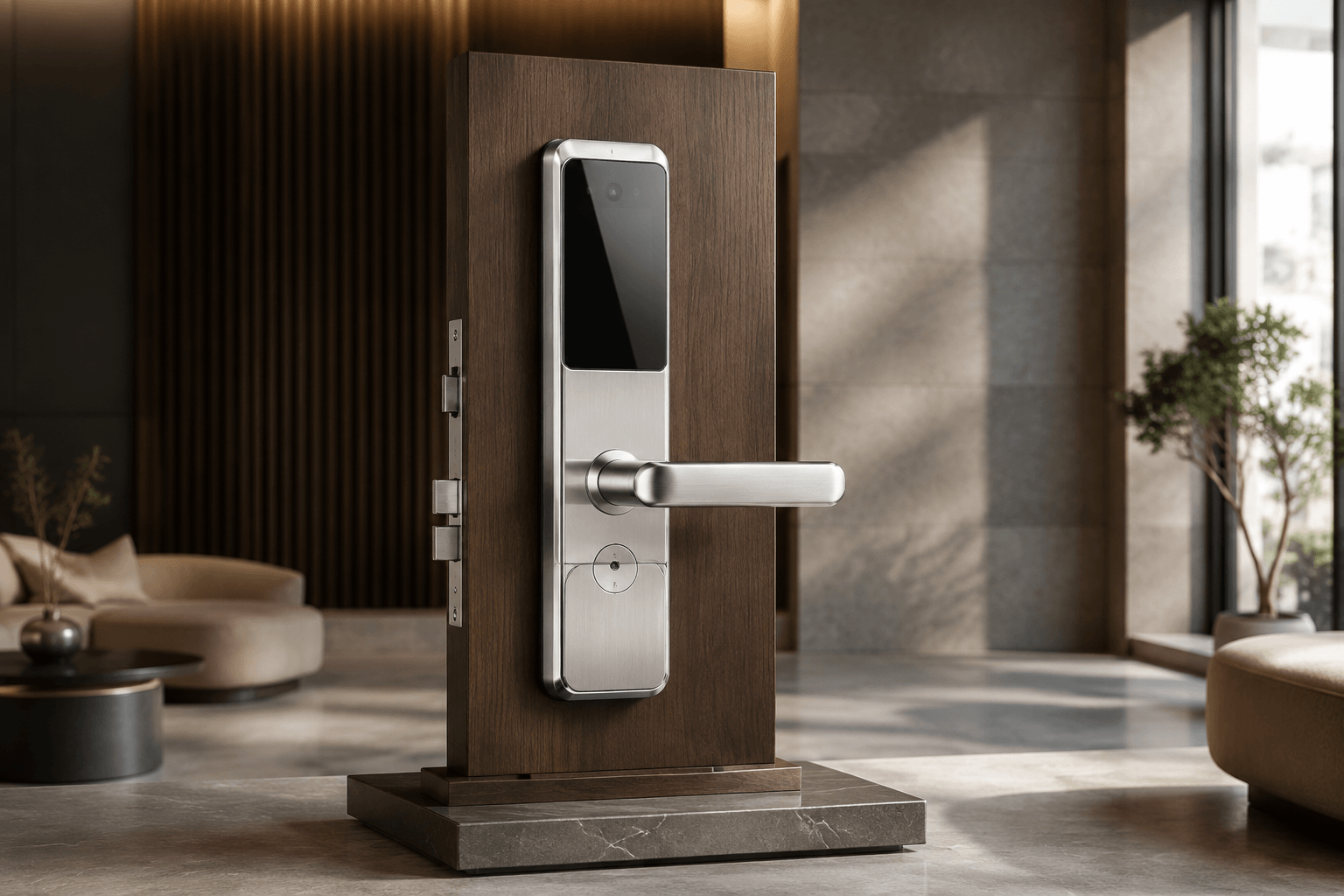
When selecting a supplier, B2B buyers focus on critical features like unlock methods, app ecosystem compatibility, and certification coverage. Unlock methods such as fingerprint authentication, RFID card access, and temporary PINs provide flexibility for diverse applications. Meanwhile, integration with platforms like TTLock and Tuya ensures seamless remote management.
As John Smith, Security Analyst, states: “Buyers increasingly prioritize suppliers that offer ANSI/BHMA Grade 1 certified locks, as 68% of commercial access control projects require this certification (BHMA, 2023).” Certification ensures reliability and compliance with international standards, which is essential for importers and distributors.
Installation compatibility is another key factor. Buyers look for locks that fit standard mortise and deadbolt configurations, reducing retrofit challenges. KEYPLUS excels in providing versatile solutions that adapt to storefront aluminum doors, hotel room doors, and apartment entryways.
Compliance, Standards, and Technical Considerations
Compliance with certifications like CE, FCC, and RoHS is mandatory for international distribution. These standards guarantee product safety, environmental responsibility, and electromagnetic compatibility. For instance, CE certification ensures adherence to EU regulations, while RoHS compliance minimizes hazardous materials in manufacturing.
Battery performance is another critical concern. Buyers should evaluate locks with efficient power consumption and backup features to prevent operational disruptions. Additionally, compatibility with door thicknesses and lock bodies is essential for smooth installation. KEYPLUS provides detailed technical documentation and project support to ensure hassle-free implementation.
Choosing the Right Keyless Lock for Your Project
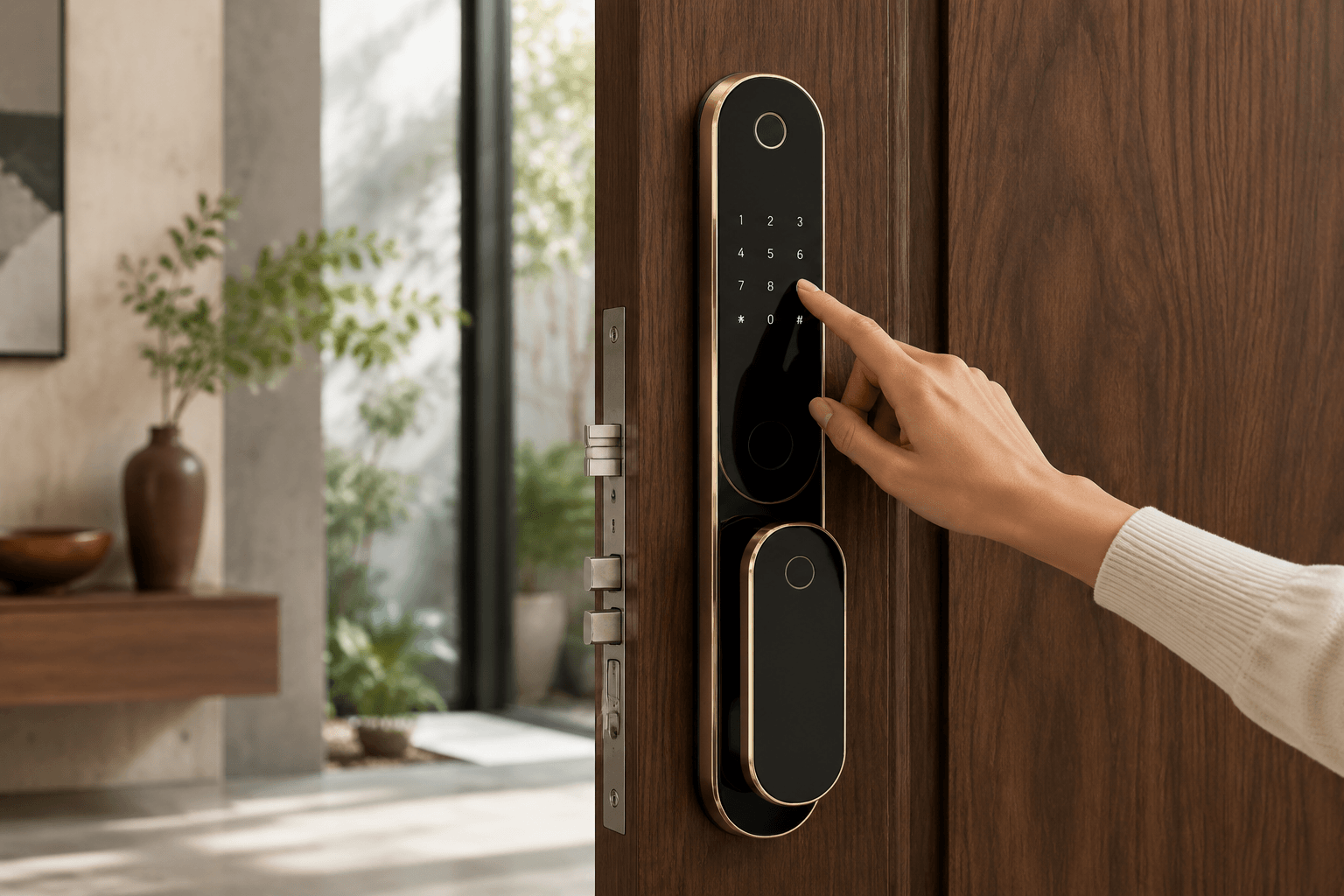
Selecting the right lock depends on your project type. For residential applications, biometric and fingerprint locks offer enhanced security and user convenience. In rental properties, app-controlled locks with remote access simplify tenant management. Hotels benefit from RFID card systems that integrate with existing property management systems.
Consider factors like door type compatibility, software integration, and installation requirements. For example, aluminum storefront doors often require specialized mortise locks. KEYPLUS provides tailored solutions and OEM flexibility to meet diverse project needs. Their low MOQs and stable lead times make them a reliable partner for distributors and importers.
Strategic Sourcing and Future Outlook
The future of smart lock manufacturing lies in biometric adoption, cloud-based access control, and scenario-based solutions. As smart home ecosystems expand, locks with voice assistant compatibility and advanced authentication methods like palm vein recognition will dominate the market.
For distributors and importers, partnering with manufacturers that offer comprehensive certification support and customization options is key to reducing project risks. KEYPLUS stands out with its commitment to quality, OEM/ODM capabilities, and long-term partnership value.
Frequently Asked Questions
Can you put a smart lock on a commercial door?
Yes, smart locks are compatible with most commercial doors, including aluminum storefronts. According to BHMA (2023), ANSI/BHMA Grade 1 locks are recommended for commercial projects due to their durability and security.
What is the top-rated keyless door lock?
Top-rated locks often include features like biometric authentication, app integration, and ANSI/BHMA certification. As John Smith, Security Analyst, notes: “Locks with TTLock or Tuya integration are highly preferred for remote access management.”
What are the disadvantages of keyless door locks?
Disadvantages include potential battery failure and cybersecurity risks. However, locks with backup power and encryption protocols mitigate these concerns.
What is a keyless entry system for commercial buildings?
Keyless entry systems use methods like PIN codes, RFID cards, or biometric authentication to grant access. These systems integrate with software platforms for centralized control.
How do you install a commercial keypad door lock?
Installation involves aligning the lock with the door’s mortise or deadbolt configuration. Detailed instructions and tools are provided by most manufacturers, including KEYPLUS.
Where can I find electronic commercial door locks?
Electronic commercial locks are available through manufacturers, distributors, and online platforms. KEYPLUS offers tailored solutions for project buyers and importers.

