
How Do Hotel Door Locks Work?
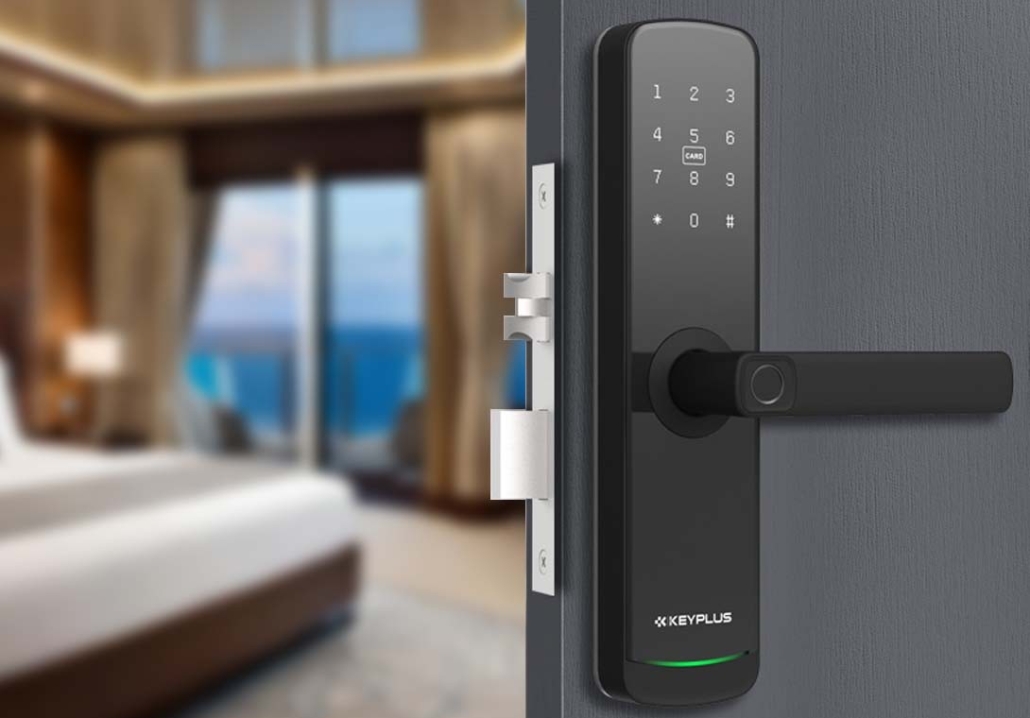
When you check into a hotel, the door lock is one of the most important security features protecting your room. Unlike traditional home locks, hotel locks use advanced technology to ensure safety, convenience, and efficient management.
But how exactly do hotel locks work?
In this guide, we’ll explain:
Different types of hotel door locks
How electronic key cards and mobile keys function
Why hotels use these systems instead of metal keys
Security features that protect guests
Whether you’re a traveler curious about hotel security or a property owner looking to upgrade your locks, this article will give you a clear understanding.
1. Types of Hotel Door Locks
Hotel locks have evolved from simple metal keys to high-tech access systems. The most common types include:
A. Traditional Metal Keys (Rare in Modern Hotels)
-
How they work: A physical key turns a mechanical lock.
-
Why they’re outdated:
-
Easy to lose or duplicate
-
No way to track who enters the room
-
Requires rekeying if a key is lost
-
B. Magnetic Stripe Key Cards (Common in Mid-Range Hotels)
-
How they work:
-
A plastic card with a magnetic strip (like a credit card) is encoded with room access data.
-
When swiped, the lock reads the data and grants or denies entry.
-
-
Pros:
-
Cheap to produce
-
Easy to reprogram for new guests
-
-
Cons:
-
Can demagnetize if near phones or magnets
-
Less secure than newer technologies
-
C. RFID (Radio Frequency Identification) Key Cards (Modern Standard)
-
How they work:
-
Uses radio waves (no swiping required—just tap the card near the reader).
-
More secure than magnetic stripe cards.
-
-
Pros:
-
Faster and more durable
-
Harder to copy than magnetic cards
-
-
Cons:
-
Slightly more expensive
-
D. Mobile Key Access (Growing in Popularity)
-
How they work:
-
Guests receive a digital key via a hotel app (e.g., Marriott, Hilton).
-
Smartphone Bluetooth or NFC unlocks the door.
-
-
Pros:
-
No physical key to lose
-
Contactless check-in possible
-
-
Cons:
-
Requires smartphone compatibility
-
E. Biometric Locks (Used in Luxury Hotels)
-
How they work:
-
Fingerprint or facial recognition unlocks the door.
-
-
Pros:
-
Extremely secure
-
No key or card needed
-
-
Cons:
-
Expensive to install
-
Privacy concerns for some guests
-
2. How Electronic Hotel Locks Function
Most modern hotels use electronic locks (RFID or mobile-based). Here’s how they work:
Step 1: Encoding the Key
-
When a guest checks in, the front desk:
-
Assigns a room number.
-
Programs a key card/mobile key with access permissions (check-in/check-out times).
-
Step 2: Communication Between Key & Lock
-
The lock has a small computer inside.
-
When a key card is tapped (or a phone is placed near the reader), the lock checks:
-
Is this key valid?
-
Is it for this room?
-
Is it within the allowed time frame?
-
Step 3: Granting or Denying Access
-
If everything matches, the lock releases the bolt and allows entry.
-
If the key is invalid (expired/wrong room), the door stays locked.
Step 4: Audit Trail (Security Feature)
-
Many hotel locks record every entry, helping staff track:
-
Who entered the room (housekeeping, guest, maintenance).
-
When they entered.
-
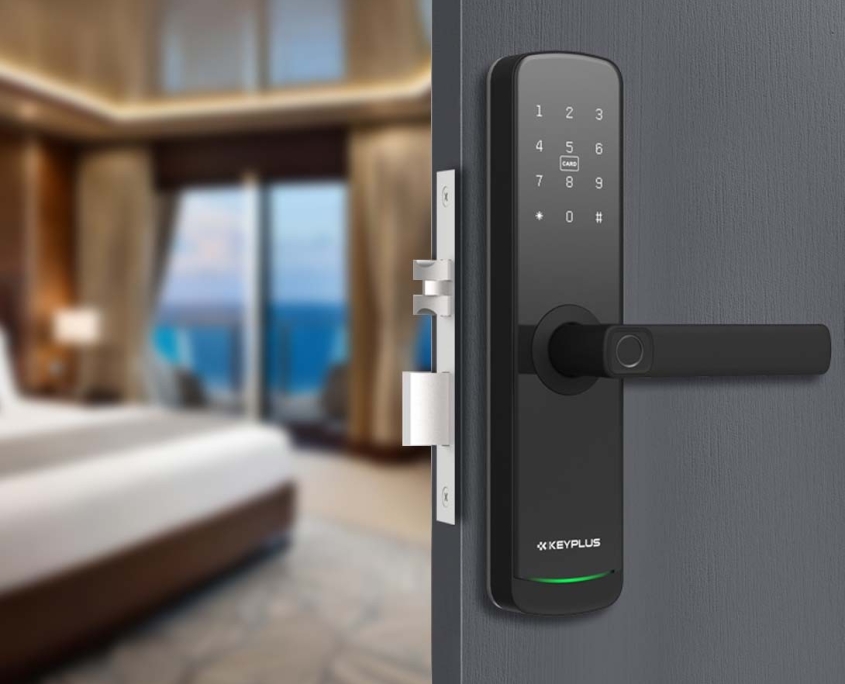
3. Why Hotels Use Electronic Locks Instead of Metal Keys
| Feature | Traditional Keys | Electronic Locks |
|---|---|---|
| Security | Easy to copy | Encrypted, hard to duplicate |
| Guest Convenience | Can be lost | Reprogrammable |
| Staff Management | No entry logs | Tracks who enters & when |
| Check-Out Process | Must collect keys | Auto-expires at checkout |
| Cost Over Time | Rekeying is expensive | Cheaper long-term |
Key Benefits for Hotels:
No More Lost Keys – If a guest loses a key card, the hotel just issues a new one (no need to change locks).
Remote Access Control – Front desk can deactivate lost keys instantly.
Housekeeping Efficiency – Staff keys can be programmed for specific time windows.
Enhanced Security – Prevents unauthorized key duplication.
4. Common Questions About Hotel Locks
Q: Can hotel key cards be hacked?
-
RFID/magnetic cards can sometimes be copied, but modern encryption makes it difficult.
-
Mobile keys (Bluetooth/NFC) are more secure.
Q: What happens if my key card stops working?
-
Return to the front desk—they’ll reprogram or replace it.
-
Common causes:
-
Demagnetization (keep away from phones).
-
Expired key (check-out time passed).
-
Q: Do hotel locks work during a power outage?
-
Most have battery backups (usually 6-12 months lifespan).
-
In emergencies, hotels have manual override keys.
Q: Can I use my smartphone as a hotel key?
-
Many chains (Marriott, Hilton, Hyatt) now support mobile keys via their apps.
5. The Future of Hotel Door Locks
-
More mobile keys (reducing plastic waste from key cards).
-
Voice recognition (Amazon Alexa/Google Assistant integration).
-
Facial recognition (already used in some high-tech hotels in China/Japan).
Conclusion: How Hotel Locks Keep You Safe
Hotel locks have come a long way from simple metal keys. Today’s systems use encrypted key cards, mobile access, and biometrics to ensure security while making check-in smoother.
For Travelers:
-
Keep key cards away from magnets/phones.
-
Use mobile keys if available for convenience.
For Hotel Owners:
-
Upgrade to RFID or mobile systems for better security.
-
Ensure locks have audit trails for safety compliance.
Would you feel safer with a mobile key or biometric lock? Let us know in the comments!
Related Blog
 https://www.keyplusystem.com/wp-content/uploads/2026/10/image-20261010-080119085.png
1024
1536
Wu, Wendy
/wp-content/uploads/2023/05/logo.png
Wu, Wendy2026-10-10 06:01:302026-10-10 06:01:31Driving Hotel Efficiency with Advanced Digital Door Locks: The Ultimate B2B Guide
https://www.keyplusystem.com/wp-content/uploads/2026/10/image-20261010-080119085.png
1024
1536
Wu, Wendy
/wp-content/uploads/2023/05/logo.png
Wu, Wendy2026-10-10 06:01:302026-10-10 06:01:31Driving Hotel Efficiency with Advanced Digital Door Locks: The Ultimate B2B Guide https://www.keyplusystem.com/wp-content/uploads/2026/10/image-20261010-000134148.png
1024
1536
Wu, Wendy
/wp-content/uploads/2023/05/logo.png
Wu, Wendy2026-10-09 22:01:442026-10-09 22:01:46Revolutionizing Hotel Security: RFID Key Cards and AIoT Smart Lock Solutions by KEYPLUS
https://www.keyplusystem.com/wp-content/uploads/2026/10/image-20261010-000134148.png
1024
1536
Wu, Wendy
/wp-content/uploads/2023/05/logo.png
Wu, Wendy2026-10-09 22:01:442026-10-09 22:01:46Revolutionizing Hotel Security: RFID Key Cards and AIoT Smart Lock Solutions by KEYPLUS https://www.keyplusystem.com/wp-content/uploads/2026/10/image-20261009-160126393.png
1024
1536
Wu, Wendy
/wp-content/uploads/2023/05/logo.png
Wu, Wendy2026-10-09 14:01:362026-10-09 14:01:38The Future of Hospitality: Wireless Hotel Lock Systems Powered by KEYPLUS
https://www.keyplusystem.com/wp-content/uploads/2026/10/image-20261009-160126393.png
1024
1536
Wu, Wendy
/wp-content/uploads/2023/05/logo.png
Wu, Wendy2026-10-09 14:01:362026-10-09 14:01:38The Future of Hospitality: Wireless Hotel Lock Systems Powered by KEYPLUS https://www.keyplusystem.com/wp-content/uploads/2026/10/image-20261009-080202455.png
1024
1536
Wu, Wendy
/wp-content/uploads/2023/05/logo.png
Wu, Wendy2026-10-09 06:02:152026-10-09 06:02:17Revolutionizing Hotel Security: The Future of Smart Locks for Hospitality Spaces
https://www.keyplusystem.com/wp-content/uploads/2026/10/image-20261009-080202455.png
1024
1536
Wu, Wendy
/wp-content/uploads/2023/05/logo.png
Wu, Wendy2026-10-09 06:02:152026-10-09 06:02:17Revolutionizing Hotel Security: The Future of Smart Locks for Hospitality Spaces https://www.keyplusystem.com/wp-content/uploads/2026/10/image-20261009-000116876.png
1024
1536
Wu, Wendy
/wp-content/uploads/2023/05/logo.png
Wu, Wendy2026-10-08 22:01:272026-10-08 22:01:29Revolutionizing Hotel Room Security: How Smart Locks Enhance Guest Safety and Operational Efficiency
https://www.keyplusystem.com/wp-content/uploads/2026/10/image-20261009-000116876.png
1024
1536
Wu, Wendy
/wp-content/uploads/2023/05/logo.png
Wu, Wendy2026-10-08 22:01:272026-10-08 22:01:29Revolutionizing Hotel Room Security: How Smart Locks Enhance Guest Safety and Operational Efficiency https://www.keyplusystem.com/wp-content/uploads/2026/10/image-20261008-080144553.png
1024
1536
Wu, Wendy
/wp-content/uploads/2023/05/logo.png
Wu, Wendy2026-10-08 06:01:552026-10-08 06:01:57Why Portable Locks are a Game-Changer for Modern Hotel Room Security
https://www.keyplusystem.com/wp-content/uploads/2026/10/image-20261008-080144553.png
1024
1536
Wu, Wendy
/wp-content/uploads/2023/05/logo.png
Wu, Wendy2026-10-08 06:01:552026-10-08 06:01:57Why Portable Locks are a Game-Changer for Modern Hotel Room Security
