
Are Fingerprint Door Locks Safe?
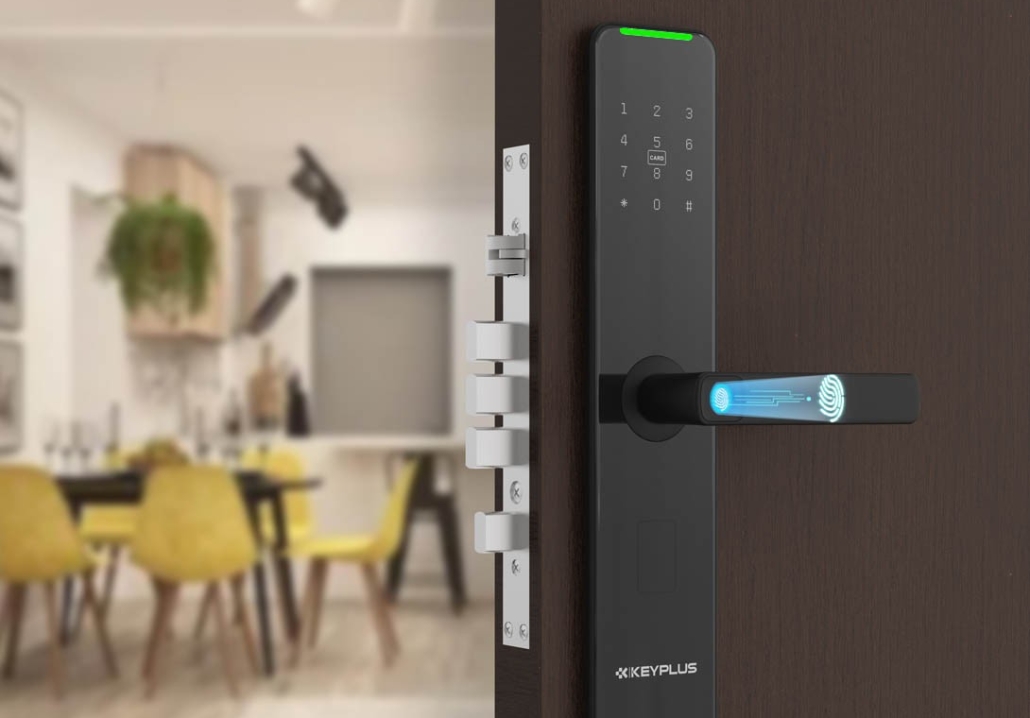
This article examines the security of fingerprint door locks, how they work, their advantages and disadvantages, and whether they are a reliable choice for your home or business.For project buyers, lock safety depends not only on fingerprint technology, but also on product quality, system design and supplier reliability.
How Do Fingerprint Door Locks Work?
Fingerprint door locks use biometric technology to scan and recognize a person’s fingerprint before granting access. Here’s a breakdown of how they function:
-
Fingerprint Scanning
-
When you place your finger on the scanner, it captures an image of your fingerprint.
-
Advanced models use optical, capacitive, or ultrasonic sensors to detect ridge patterns.
-
-
Data Matching
-
The scanned fingerprint is compared to pre-registered fingerprints stored in the lock’s memory.
-
If there’s a match, the lock disengages and allows entry.
-
-
Access Control
-
Some locks allow multiple fingerprints (for family members or employees).
-
High-end models include backup entry methods like PIN codes, RFID cards, or smartphone apps.
-
Are Fingerprint Locks Really Secure?
Fingerprint locks offer several security benefits but also have potential vulnerabilities. Let’s evaluate their safety in detail.
Advantages: Why Fingerprint Locks Are Secure
1. Unique Biometric Authentication
-
Unlike keys or PIN codes, fingerprints cannot be easily duplicated or guessed.
-
The probability of two people having identical fingerprints is 1 in 64 billion, making unauthorized access extremely difficult.
2. No Physical Keys to Lose or Copy
-
Traditional keys can be lost, stolen, or duplicated without your knowledge.
-
Fingerprint locks eliminate this risk since access depends on biometric data.
3. Tamper-Proof Features
-
Many fingerprint locks include:
-
Anti-spoofing technology (detects fake fingerprints made from silicone or gel).
-
Brute-force protection (locks out after multiple failed attempts).
-
Alarm triggers (sounds an alert if tampering is detected).
-
4. No Password Theft Risk
-
Unlike PIN codes, fingerprints cannot be “shoulder surfed” (observed by someone nearby).
5. Audit Trail & Access Logs
-
Smart fingerprint locks record who enters and when, providing better security monitoring.
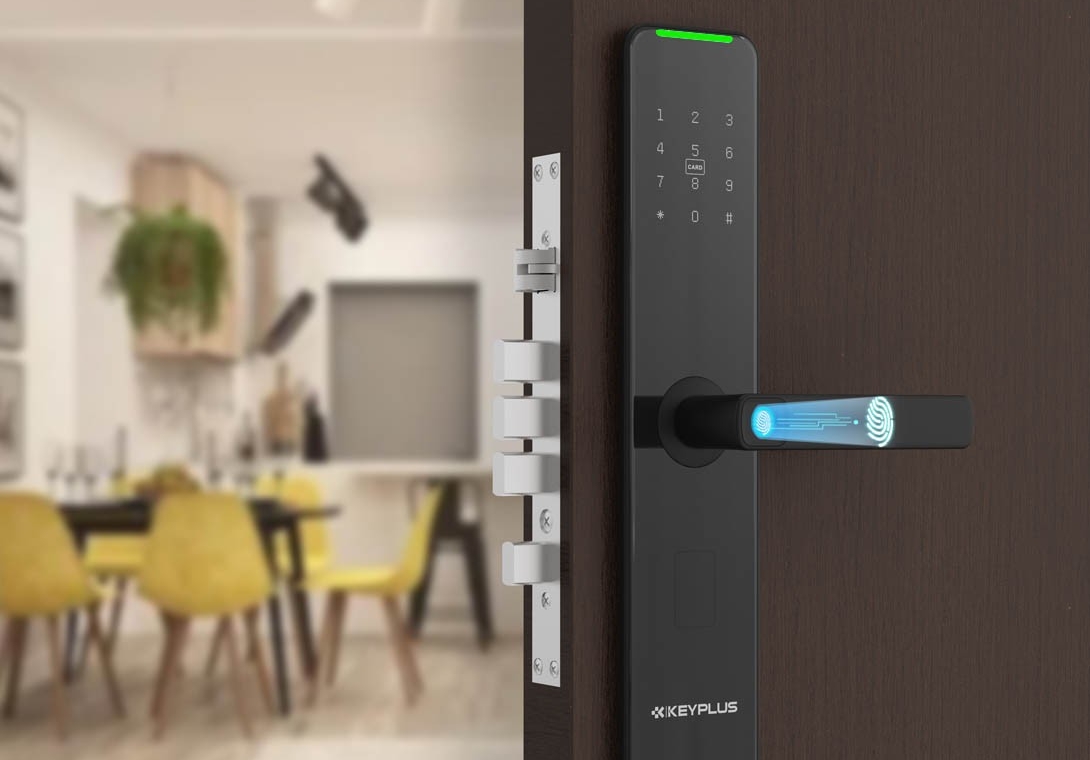
Potential Security Risks of Fingerprint Locks
Despite their advantages, fingerprint locks are not foolproof. Here are some concerns:
1. False Acceptance & False Rejection Errors
-
False Acceptance (FAR): The lock mistakenly approves an unauthorized fingerprint.
-
False Rejection (FRR): The lock fails to recognize a legitimate user.
-
Solution: High-quality locks minimize these errors with advanced sensors.
2. Fingerprint Spoofing (Fake Fingerprints)
-
Some low-cost locks can be tricked with high-resolution photos, silicone molds, or lifted fingerprints.
-
Solution: Choose locks with live fingerprint detection (measures blood flow or temperature).
3. Power & Connectivity Issues
-
If the lock runs on batteries, it may fail when drained.
-
Wi-Fi/Bluetooth-enabled locks could be vulnerable to hacking or signal jamming.
-
Solution: Opt for models with backup power (USB charging) and strong encryption.
4. Physical Tampering & Bypass Attacks
-
Some fingerprint locks can be forcibly removed or bypassed using manual override keys.
-
Solution: Install reinforced strike plates and choose keyless backup options (like mobile app access).
5. Privacy Concerns
-
Storing biometric data raises questions:
-
Can hackers steal fingerprint data?
-
Is the data stored locally or in the cloud?
-
-
Solution: Look for locks with local storage only and no cloud dependency.
How to Choose a Secure Fingerprint Door Lock
For hotel, apartment and residential projects, product safety should be evaluated together with product quality, certification and supplier support.
Not all fingerprint locks are equally secure. Follow these tips when selecting one:
1. Check the Sensor Type
-
Optical sensors (basic, easier to spoof)
-
Capacitive sensors (more secure, detects live skin)
-
Ultrasonic sensors (most advanced, 3D mapping)
2. Look for Anti-Spoofing Features
-
Pulse detection, temperature sensing, or pressure sensitivity prevent fake fingerprints.
3. Ensure Backup Entry Methods
-
Choose locks with PIN codes, RFID cards, or mobile app access in case of fingerprint failure.
4. Check Encryption & Cybersecurity
-
If Wi-Fi/Bluetooth-enabled, ensure AES-128 or higher encryption to prevent hacking.
5. Read Reviews & Brand Reputation
-
Stick to reputable brands like Keyplus.
Final Verdict: Are Fingerprint Locks Safe?
Yes—but only if you choose a high-quality model with strong security features.
Fingerprint door locks are more secure than traditional locks in many ways because they eliminate key-related risks. However, they are not 100% unhackable. The best approach is to:
-
Invest in a premium fingerprint lock with anti-spoofing tech.
-
Combine it with other security measures (smart cameras, alarms).
-
Avoid cheap, no-name brands that may have weak sensors.
For most homeowners and businesses, fingerprint locks provide an excellent balance of convenience and security. Just make sure to do your research before buying!
Would You Use a Fingerprint Door Lock?
What’s your biggest concern—security risks, privacy, or reliability? Share your thoughts in the comments!
Related Blog
 https://www.keyplusystem.com/wp-content/uploads/2026/10/image-20261010-080119085.png
1024
1536
Wu, Wendy
/wp-content/uploads/2023/05/logo.png
Wu, Wendy2026-10-10 06:01:302026-10-10 06:01:31Driving Hotel Efficiency with Advanced Digital Door Locks: The Ultimate B2B Guide
https://www.keyplusystem.com/wp-content/uploads/2026/10/image-20261010-080119085.png
1024
1536
Wu, Wendy
/wp-content/uploads/2023/05/logo.png
Wu, Wendy2026-10-10 06:01:302026-10-10 06:01:31Driving Hotel Efficiency with Advanced Digital Door Locks: The Ultimate B2B Guide https://www.keyplusystem.com/wp-content/uploads/2026/10/image-20261010-000134148.png
1024
1536
Wu, Wendy
/wp-content/uploads/2023/05/logo.png
Wu, Wendy2026-10-09 22:01:442026-10-09 22:01:46Revolutionizing Hotel Security: RFID Key Cards and AIoT Smart Lock Solutions by KEYPLUS
https://www.keyplusystem.com/wp-content/uploads/2026/10/image-20261010-000134148.png
1024
1536
Wu, Wendy
/wp-content/uploads/2023/05/logo.png
Wu, Wendy2026-10-09 22:01:442026-10-09 22:01:46Revolutionizing Hotel Security: RFID Key Cards and AIoT Smart Lock Solutions by KEYPLUS https://www.keyplusystem.com/wp-content/uploads/2026/10/image-20261009-160126393.png
1024
1536
Wu, Wendy
/wp-content/uploads/2023/05/logo.png
Wu, Wendy2026-10-09 14:01:362026-10-09 14:01:38The Future of Hospitality: Wireless Hotel Lock Systems Powered by KEYPLUS
https://www.keyplusystem.com/wp-content/uploads/2026/10/image-20261009-160126393.png
1024
1536
Wu, Wendy
/wp-content/uploads/2023/05/logo.png
Wu, Wendy2026-10-09 14:01:362026-10-09 14:01:38The Future of Hospitality: Wireless Hotel Lock Systems Powered by KEYPLUS https://www.keyplusystem.com/wp-content/uploads/2026/10/image-20261009-080202455.png
1024
1536
Wu, Wendy
/wp-content/uploads/2023/05/logo.png
Wu, Wendy2026-10-09 06:02:152026-10-09 06:02:17Revolutionizing Hotel Security: The Future of Smart Locks for Hospitality Spaces
https://www.keyplusystem.com/wp-content/uploads/2026/10/image-20261009-080202455.png
1024
1536
Wu, Wendy
/wp-content/uploads/2023/05/logo.png
Wu, Wendy2026-10-09 06:02:152026-10-09 06:02:17Revolutionizing Hotel Security: The Future of Smart Locks for Hospitality Spaces https://www.keyplusystem.com/wp-content/uploads/2026/10/image-20261009-000116876.png
1024
1536
Wu, Wendy
/wp-content/uploads/2023/05/logo.png
Wu, Wendy2026-10-08 22:01:272026-10-08 22:01:29Revolutionizing Hotel Room Security: How Smart Locks Enhance Guest Safety and Operational Efficiency
https://www.keyplusystem.com/wp-content/uploads/2026/10/image-20261009-000116876.png
1024
1536
Wu, Wendy
/wp-content/uploads/2023/05/logo.png
Wu, Wendy2026-10-08 22:01:272026-10-08 22:01:29Revolutionizing Hotel Room Security: How Smart Locks Enhance Guest Safety and Operational Efficiency https://www.keyplusystem.com/wp-content/uploads/2026/10/image-20261008-080144553.png
1024
1536
Wu, Wendy
/wp-content/uploads/2023/05/logo.png
Wu, Wendy2026-10-08 06:01:552026-10-08 06:01:57Why Portable Locks are a Game-Changer for Modern Hotel Room Security
https://www.keyplusystem.com/wp-content/uploads/2026/10/image-20261008-080144553.png
1024
1536
Wu, Wendy
/wp-content/uploads/2023/05/logo.png
Wu, Wendy2026-10-08 06:01:552026-10-08 06:01:57Why Portable Locks are a Game-Changer for Modern Hotel Room Security
