
Best Hotel Door Locks for New Builds and Retrofits
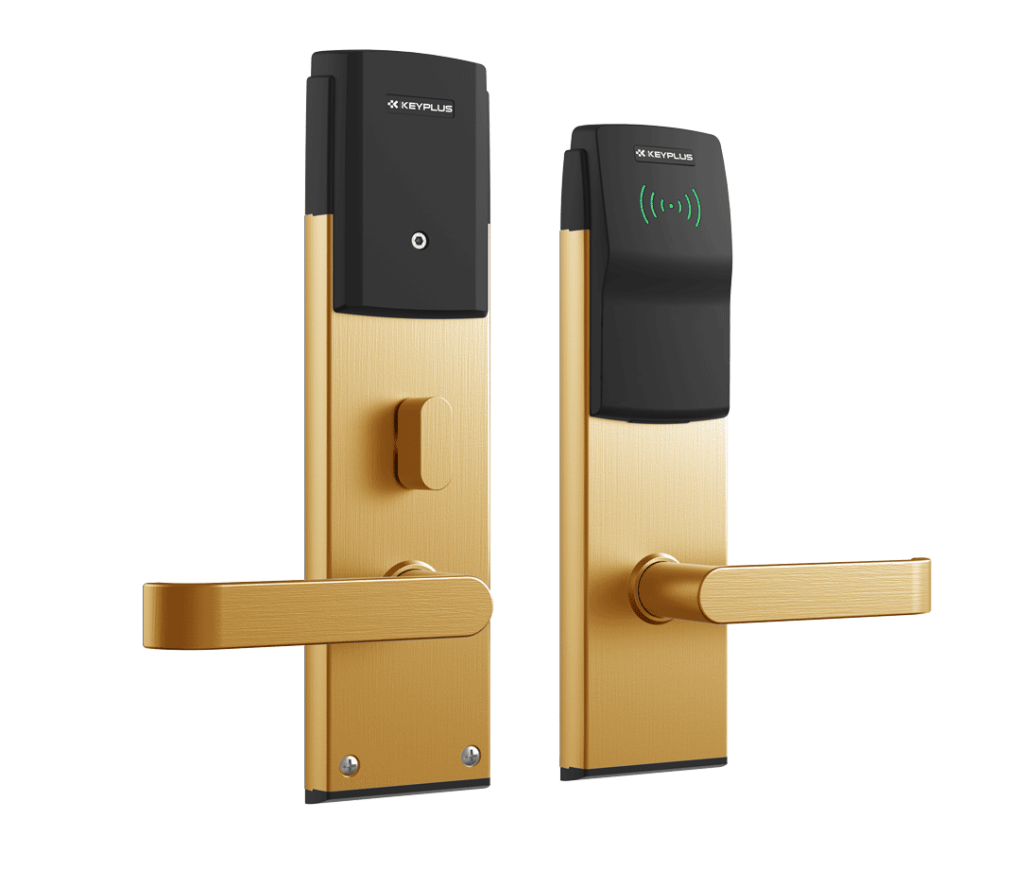
The best hotel door locks fit the door, support the property’s guest-access workflow and work with the chosen management system. For new builds and renovations, selection starts with the mortise and door preparation, then moves to card issuing, access records, maintenance and any connected services the hotel needs.
KEYPLUS manufactures hotel RFID locks and supporting equipment for project supply. Standard hotel locks use M1 guest cards for room access. Panel designs offer different visual choices, while the lock hardware and management configuration determine how the installation works.
Which Hotel Lock Setup Fits Your Property?
For routine front-desk card issuing, a standalone M1 RFID system is a practical starting point. For an existing-door renovation, compatible door hardware comes first. For remote administration or room-device coordination, a networked or customized solution is the relevant route.
| Hotel requirement | Suitable starting point | Why it fits |
|---|---|---|
| Reception issues cards for each stay | Standalone M1 RFID hotel locks with compatible card-issuing equipment. | Cards are validated at the door without Wi-Fi, with access periods set for the guest’s stay. |
| Replace locks on existing room doors | A panel and mortise combination matched to the existing door preparation. | The lock case, fixing points and strike determine whether the replacement fits. Management scope can then follow the property’s needs. |
| Manage access remotely | A networked lock configuration with a matching gateway. | Remote functions use the project’s communication path and selected software services. |
| Coordinate locks, elevator access and room devices | A project-based integrated solution using the self-developed PMS platform. | Hardware and workflow integration can be tailored around the hotel’s operations. |
For a new build, lock hardware can be coordinated with the door design from the start. For a multi-property rollout, the same selection process can establish consistent configurations, finishes and maintenance arrangements across sites.
Start with Door and Mortise Compatibility
The mortise is the lock case fitted into the door edge. Its relationship with the panel, handle and strike is central to a working hotel door. Panel appearance alone does not establish whether a replacement will fit an existing opening.
In a renovation, the important relationships include the handle position, fixing points, lock-case opening and strike position in the frame. Door thickness, opening direction and available frame space also affect the finished installation. A slim panel is a design choice; a compatible mortise and fixing layout make it a workable retrofit.
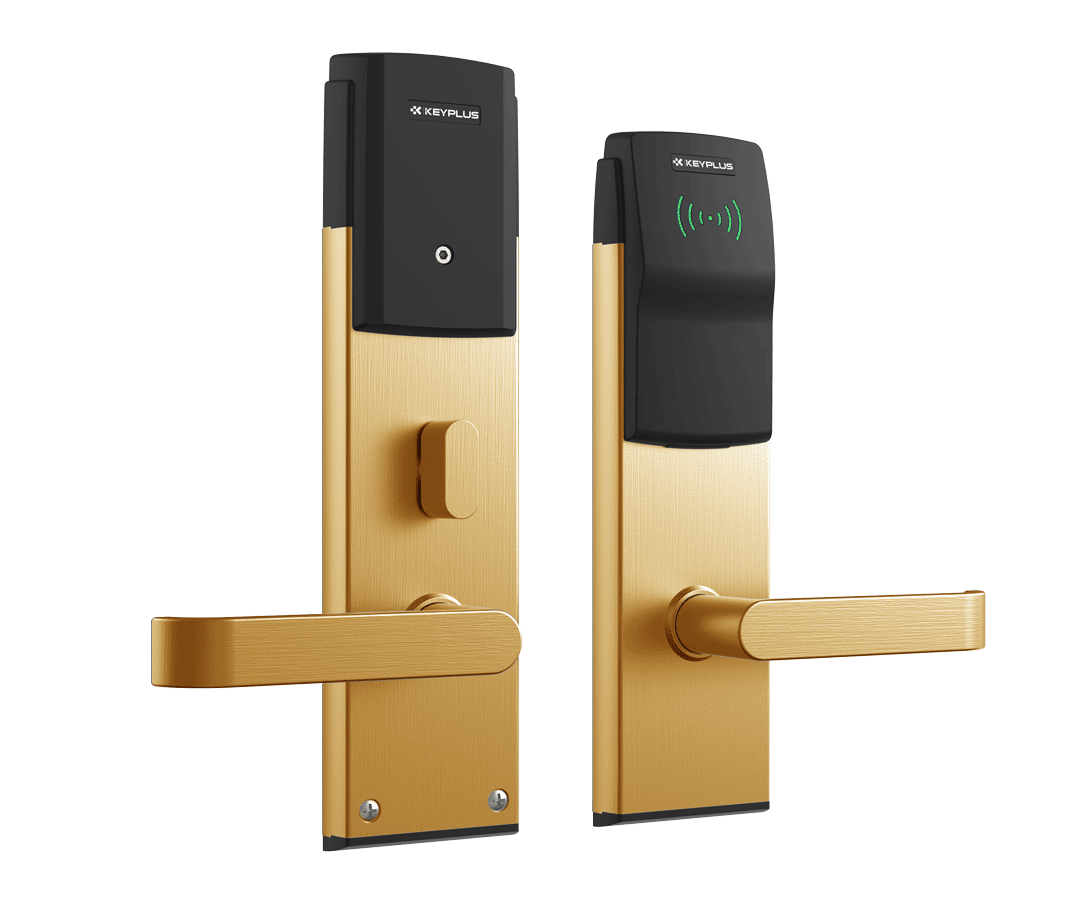
The KEYPLUS M1-112 hotel RFID lock can be configured with a 9370B mortise. The HT-L2 slim-panel hotel lock offers a different set of mortise options. This makes the lock case a useful comparison point alongside the panel design.
| Hotel lock | Mortise options | Selection relevance |
|---|---|---|
| M1-112 | 9370B | A panel-and-mortise combination to match against the door preparation. |
| HT-L2 | 9370A or ZN-7255 | Alternative lock-case configurations within a slim-panel design. |
The selected mortise still needs to align with the opening, fixing positions and strike. The hotel door lock collection provides more design choices without limiting the system to these two examples.
Standalone or Networked: What Changes the Buying Decision?
Standard KEYPLUS hotel locks are standalone by default. This suits a reception-led workflow in which M1 guest cards authorize local room entry for a defined stay. Networked projects use a TCP/IP-based solution and matching gateway, with remote functions and cloud services tied to the selected configuration and service term.
The distinction is the management scope the hotel needs. KEYPLUS’s self-developed PMS platform is available for customized hotel operations and hardware coordination, including locks, elevator access and room devices. Standard lock management and a broader integrated platform are separate solutions. The hotel lock system solution explains the equipment and integration options in detail.
Evaluate Guest Cards, Access Records and Emergency Entry
Hotel lock selection extends beyond a successful card tap. The property also needs a practical way to manage checkout, handle a lost card, collect records and maintain access when batteries need attention.
- Guest access periods: M1 cards use the stay validity programmed at reception, giving each booking a defined access period.
- Offline records: KEYPLUS offline locks store access events locally in circular storage. Older records are overwritten when storage is full, and supported collection cards or handheld collectors export records to a computer.
- Battery maintenance: low-battery reminders indicate when replacement is needed. Battery format and emergency-power connections are model-specific.
- Emergency entry: mechanical emergency access and external power inputs, where fitted, provide authorized entry routes when electronic access is unavailable.
For the difference between building electricity, lock batteries and network availability, read how electronic door locks are powered. A room lock and the reception equipment have separate power requirements.
What Should a Hotel Door Lock Supplier Provide?
For a useful project comparison, the supply scope needs to separate the room locks, reception equipment and any development work. KEYPLUS provides coordinated hardware supply and technical support:
- Room-lock supply: the selected lock design, matched mortise configuration and project finish.
- Reception and access equipment: standard self-developed hotel lock management software is included free with lock purchases. Compatible encoders, M1 cards and handheld data collection equipment are quoted separately; the hotel provides its own computer. Energy-saving switches are available within the accessory range.
- Project services: installation guidance, software support, replacement-parts support and OEM/ODM smart lock customization. Integration and overseas on-site services are agreed for the project.
The supplied lock model, mortise and door assembly define the project-specific compliance scope.
Project Reference: Regal Riverside Hotel, Hong Kong

Regal Riverside Hotel in Hong Kong selected the KEYPLUS HT-S20 for a project covering 1,142 locks. The project illustrates how a hotel lock design can form part of a coordinated property upgrade. Explore the HT-S20 hotel lock for the product, or the hospitality access solutions for the wider application.
Hotel Door Lock Selection FAQs
Can a hotel keep its existing cards and encoder?
KEYPLUS card issuing uses a matching KEYPLUS encoder. Previously encrypted cards cannot simply be reused, while blank M1 cards can be prepared for the KEYPLUS system. Existing room-power switches require compatibility with the chosen card arrangement.
Does cancelling a lost card in software stop an offline lock immediately?
No. At an offline KEYPLUS M1 lock, early cancellation takes effect after a replacement or cancellation card is presented at the door, or the lock is synchronized using the supported handheld device. A card’s programmed checkout expiry is applied locally.
Can mobile keys be added to the hotel lock project?
Mobile-key availability depends on the selected lock version, platform and project solution. It is separate from standard M1 guest-card access and is specified as part of the chosen configuration.
Can the hotel choose its own branding and finish?
Yes. KEYPLUS offers project branding and finish customization through its OEM/ODM services. Hardware and software customization can also be included, with the scope and commercial terms agreed for the project.
Choose Hotel Locks Around Your Property
From room-door hardware to reception equipment, KEYPLUS supports coordinated hotel lock supply for new builds and renovations.

