
Home Smart Lock: Is Face ID More Secure Than a Password?
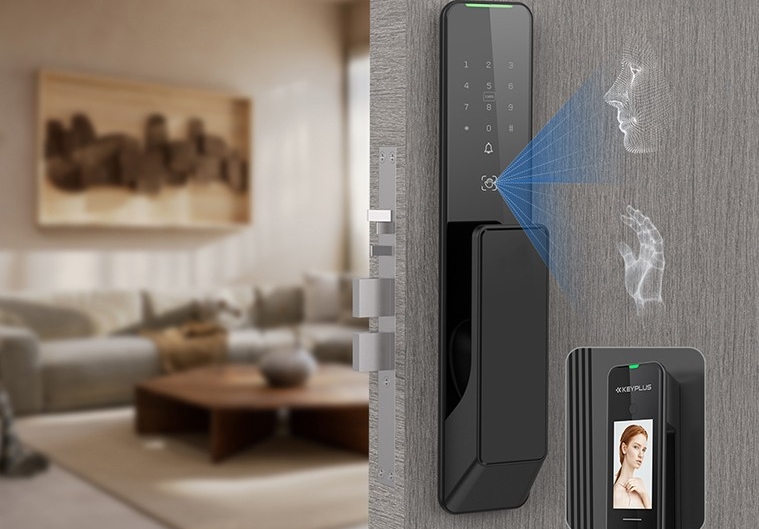
In today’s fast-paced world, smart home technology is evolving rapidly, and one of the most significant advancements is the smart lock. Traditional keys are becoming obsolete as homeowners embrace keyless entry systems powered by passwords, fingerprint scanners, and even facial recognition (Face ID). But when it comes to security, which method is truly superior?
For American homeowners, security is a top priority. With rising concerns about break-ins and digital hacking, choosing the right smart lock authentication method is crucial. So, is Face ID more secure than a password? Let’s break it down.
1. The Rise of Smart Locks: Convenience vs. Security
Smart locks offer keyless convenience, remote access, and integration with home automation systems like Amazon Alexa, Google Home, and Apple HomeKit. The two most common authentication methods are:
- Passwords (PIN codes) – A numeric or alphanumeric code entered via a keypad.
- Face ID (Facial Recognition) – Uses biometric data to verify identity.
Both have pros and cons, but which one provides better security?
2. How Secure Are Password-Protected Smart Locks?
Pros of Password-Based Locks:
Easy to use – No need to carry a key or remember complex biometric data.
Customizable – Users can change the code frequently for added security.
No physical vulnerability – Unlike keys, passwords can’t be lost or duplicated.
Cons of Password-Based Locks:
Shoulder surfing risk – Someone could watch you enter the code.
No user-specific tracking – If multiple people share a code, it’s hard to know who accessed the door.
Best for: Rentals, Airbnb hosts, or households with frequent guests who need temporary access.
3. How Secure Is Face ID for Smart Locks?
Facial recognition technology has improved significantly, with Apple’s Face ID and Android’s Face Unlock setting high standards. But is it reliable for home security?
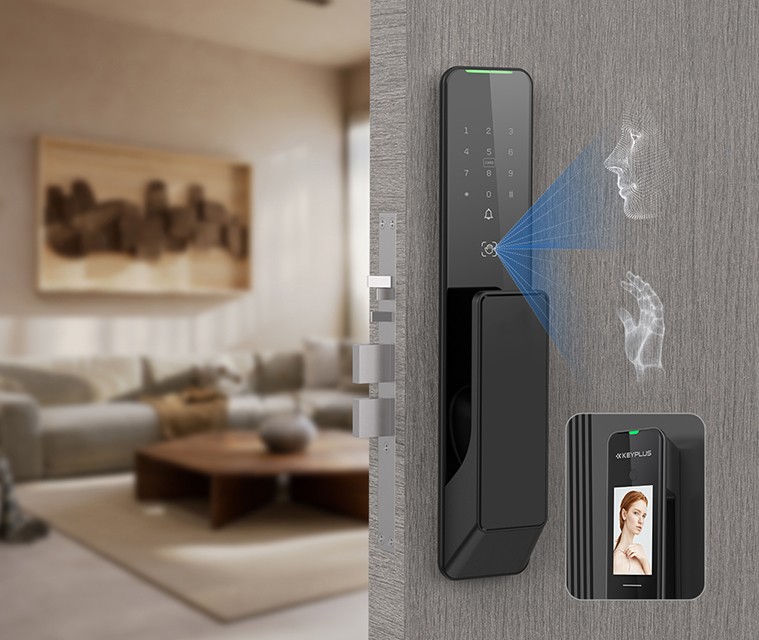
Pros of Face ID Smart Locks:
Highly secure – Advanced algorithms detect 3D facial contours, making spoofing difficult.
No memorization needed – No codes to forget or share.
User-specific access – Tracks exactly who enters and exits.
Fast and seamless – Just look at the lock, and it opens.
Cons of Face ID Smart Locks:
Lighting and angle limitations – Poor lighting or odd angles may cause recognition failures.
Potential privacy concerns – Some users worry about biometric data storage.
Higher cost – Face ID locks are generally more expensive than password-based ones.
Best for: High-security homes where convenience and identity verification are critical.
4. Face ID vs. Password: Which Is More Secure?
Security Comparison:
| Feature | Face ID | Password |
|---|---|---|
| Spoofing Risk | Low (if using 3D scanning) | Medium (if code is weak) |
| Hacking Risk | Very Low (biometrics are hard to replicate) | Medium (if brute-forced) |
| Convenience | High (hands-free) | Medium (requires input) |
| Privacy Concerns | Medium (biometric data storage) | Low (no personal data stored) |
| Cost | Higher | Lower |
Which Should You Choose?
- If security is your top priority, Face ID is the winner—it’s much harder to fake a face than to guess a password.
- If you want affordability and flexibility, a strong, frequently updated password is still a solid choice.
For maximum security, some smart locks offer multi-factor authentication (MFA), combining Face ID + PIN or Fingerprint + Password.
5. Future of Smart Lock Security: What’s Next?
As technology advances, we can expect:
AI-powered facial recognition – Detects masks, glasses, and aging.
Voice recognition integration – “Hey Google, unlock my door.”
Blockchain-based security – Decentralized authentication for unhackable access.
Final Verdict: Is Face ID More Secure Than a Password?
Yes—Face ID is generally more secure than a password because it relies on unique biological traits that are extremely difficult to replicate. However, a strong, well-managed password system can still be highly secure if used correctly.
For American homeowners, the best choice depends on:
- Budget (Face ID locks cost more)
- Security needs (high-risk areas may benefit from biometrics)
- Ease of use (Face ID is faster but may fail in low light)
Recommendation:
If you can afford it, go for a Face ID smart lock for top-tier security. If you prefer a budget-friendly option, use a strong, frequently changed password and consider two-factor authentication.
Final Thought:
Whether you choose Face ID or a password, the key is staying ahead of potential threats. Smart locks are a game-changer for home security—just pick the one that fits your lifestyle best.
Do you want to know more about 3D facial recognition smart locks? Please leave a message in the comment area to contact us!
Related Blog
 https://www.keyplusystem.com/wp-content/uploads/2026/06/image-20260630-085513.png
1024
1536
Wu, Wendy
/wp-content/uploads/2023/05/logo.png
Wu, Wendy2026-06-30 06:55:242026-06-30 06:55:26How Hotel Smart Locks Are Transforming Hospitality: A Comprehensive B2B Guide
https://www.keyplusystem.com/wp-content/uploads/2026/06/image-20260630-085513.png
1024
1536
Wu, Wendy
/wp-content/uploads/2023/05/logo.png
Wu, Wendy2026-06-30 06:55:242026-06-30 06:55:26How Hotel Smart Locks Are Transforming Hospitality: A Comprehensive B2B Guide https://www.keyplusystem.com/wp-content/uploads/2026/06/image-20260630-045651.png
1024
1536
Wu, Wendy
/wp-content/uploads/2023/05/logo.png
Wu, Wendy2026-06-30 02:57:022026-06-30 06:30:57Smart Wi-Fi Locks Redefined: KEYPLUS Solutions for Modern Enterprises
https://www.keyplusystem.com/wp-content/uploads/2026/06/image-20260630-045651.png
1024
1536
Wu, Wendy
/wp-content/uploads/2023/05/logo.png
Wu, Wendy2026-06-30 02:57:022026-06-30 06:30:57Smart Wi-Fi Locks Redefined: KEYPLUS Solutions for Modern Enterprises https://www.keyplusystem.com/wp-content/uploads/2026/06/image-20260630-032502.png
1024
1536
Wu, Wendy
/wp-content/uploads/2023/05/logo.png
Wu, Wendy2026-06-30 01:25:162026-06-30 05:50:57Smart Wi-Fi Locks: Integrating Advanced Access Control with Edge Computing Solutions
https://www.keyplusystem.com/wp-content/uploads/2026/06/image-20260630-032502.png
1024
1536
Wu, Wendy
/wp-content/uploads/2023/05/logo.png
Wu, Wendy2026-06-30 01:25:162026-06-30 05:50:57Smart Wi-Fi Locks: Integrating Advanced Access Control with Edge Computing Solutions https://www.keyplusystem.com/wp-content/uploads/2026/06/image-20260626-050047-1.png
1024
1536
Wu, Wendy
/wp-content/uploads/2023/05/logo.png
Wu, Wendy2026-06-26 09:54:342026-06-30 05:57:47Why B2B Smart Lock Solutions Are Redefining Access Control in 2026
https://www.keyplusystem.com/wp-content/uploads/2026/06/image-20260626-050047-1.png
1024
1536
Wu, Wendy
/wp-content/uploads/2023/05/logo.png
Wu, Wendy2026-06-26 09:54:342026-06-30 05:57:47Why B2B Smart Lock Solutions Are Redefining Access Control in 2026 https://www.keyplusystem.com/wp-content/uploads/2026/05/image-20260530-120210-1.png
1024
1536
Wu, Wendy
/wp-content/uploads/2023/05/logo.png
Wu, Wendy2026-05-30 04:02:212026-05-30 04:02:23Most Secure Smart Lock Trends for B2B Buyers | KEYPLUS
https://www.keyplusystem.com/wp-content/uploads/2026/05/image-20260530-120210-1.png
1024
1536
Wu, Wendy
/wp-content/uploads/2023/05/logo.png
Wu, Wendy2026-05-30 04:02:212026-05-30 04:02:23Most Secure Smart Lock Trends for B2B Buyers | KEYPLUS https://www.keyplusystem.com/wp-content/uploads/2026/05/image-20260530-060323.png
1024
1536
Wu, Wendy
/wp-content/uploads/2023/05/logo.png
Wu, Wendy2026-05-29 22:03:352026-05-29 22:03:37WiFi Door Knob Market Trends for 2024 Buyers
https://www.keyplusystem.com/wp-content/uploads/2026/05/image-20260530-060323.png
1024
1536
Wu, Wendy
/wp-content/uploads/2023/05/logo.png
Wu, Wendy2026-05-29 22:03:352026-05-29 22:03:37WiFi Door Knob Market Trends for 2024 Buyers
