
How B2B Buyers Should Evaluate Smart Door Lock Brands in the U.S. and Globally
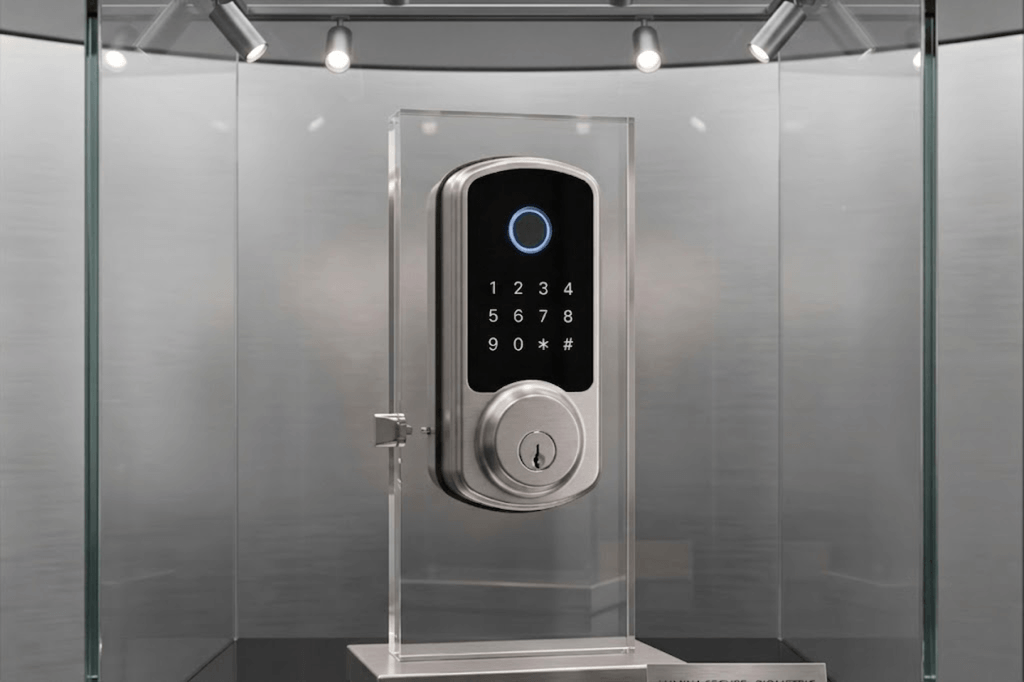
Smart Lock Market Demand and Application Trends Shaping Manufacturer Selection
Smart lock demand is being driven by three overlapping forces: smart home adoption, digital access control for rental and hospitality, and stricter security expectations from residents and guests. According to Grand View Research (2023), more than 40% of U.S. households now own at least one smart home security device, and smart locks are among the top three categories by penetration. For B2B buyers, this translates into clear expectations: mobile app control, biometric unlock, and remote access are increasingly treated as baseline, not premium add-ons.
In the rental and hospitality sector, automation is the main driver. McKinsey’s real estate analysis notes that self-guided tours and contactless check-in can cut on-site staffing costs by 10–20% for multifamily and hotel operators (McKinsey, 2023). A robust smart lock manufacturer must therefore support temporary passcodes, RFID card access for staff, and integration with property management or channel systems. U.S. hotel brands are standardizing on hotel door lock solutions that combine RFID, mobile key, and audit trails in one platform.
For apartment and build-to-rent projects, the shift is from unit-by-unit buying to portfolio-level standardization. MarketsandMarkets (2023) reports that multi-family and commercial deployments account for nearly 30% of smart lock revenue, and this share is expected to rise as institutional capital flows into rental housing. Buyers are no longer comparing only individual locks; they are evaluating entire ecosystems across entrance doors, unit doors, common areas, and back-of-house access.
Manufacturers that can serve multiple scenarios—residential entrance doors, apartment smart locks, hotel locks, and office access control—have an advantage. U.S. smart lock manufacturers often focus on deadbolt smart locks for retrofit, while specialized export manufacturers like KEYPLUS build broader portfolios including mortise smart locks, biometric locks, and project-oriented RFID hotel lock systems. This multi-scenario coverage allows distributors to consolidate SKUs and training with one or two core brands instead of managing a fragmented mix of suppliers.
Product Features and Supplier Evaluation Criteria for Smart Lock Manufacturers
When buyers compare smart lock manufacturers—whether U.S. brands such as Yale, Kwikset, and Schlage, or global suppliers like KEYPLUS smart lock manufacturer—they are ultimately assessing risk and lifetime value. The checklist goes far beyond price per unit.
1. Unlock methods and user experience
B2B customers expect multiple unlock options in a single device: fingerprint, PIN code, RFID card, app control, and mechanical key backup. In higher-end projects, 3D face recognition smart locks or palm vein recognition are now being specified for premium apartments and executive offices. Consumer Technology Association data shows that over 60% of smart lock buyers prioritize biometric authentication as a key decision factor (CTA, 2023). A manufacturer that has mature biometric algorithms and stable sensor sourcing will deliver lower false rejection rates and fewer support tickets.
2. App ecosystem, TTLock, and Tuya integration
For many distributors, the app is now as important as the lock body. Property managers want centralized dashboards, remote access, audit trails, and the ability to issue temporary passcodes. TTLock smart lock and Tuya smart lock ecosystems are widely used because they offer cloud infrastructure, gateway connectivity, and APIs for integration. As Lisa Warren, PropTech Integration Consultant, states: “When I evaluate a smart lock manufacturer, I start with the software stack and integration roadmap—hardware can be retooled, but a weak app ecosystem is expensive to fix later.” Buyers should confirm whether the manufacturer offers native TTLock or Tuya support, or a stable proprietary platform with open APIs.
3. Door compatibility and installation flexibility
In mixed portfolios, installers may face U.S.-style deadbolts, European profile cylinders, and Asian mortise lock bodies in the same project. According to Fortune Business Insights (2023), more than 55% of smart locks sold globally are retrofit solutions designed to work with existing doors. Procurement teams should verify:
- Supported door thickness (e.g., 35–60 mm for most residential doors)
- Backset and mortise dimensions for project-based mortise locks
- Left/right door handing and reversible handles
- Fire-rated door compatibility where required
Manufacturers like KEYPLUS that produce both deadbolt smart locks and mortise digital locks can support North American retrofit and new-build projects in Asia, the Middle East, and Europe with one catalog.
4. Quality consistency, certifications, and field stability
For B2B buyers, field failure rates drive warranty cost and brand perception. Industry feedback suggests that maintaining a return rate below 1–2% on smart locks is a realistic target for reputable manufacturers. Buyers should ask for:
- Cycle test results (e.g., 200,000+ handle operations)
- Salt spray and corrosion testing for coastal or humid environments
- Temperature and humidity test reports
- Real project references with deployment size and years in service
Brands that export at scale typically maintain CE, FCC, and RoHS compliance for electronics and may follow ANSI/BHMA grading for mechanical performance. BHMA/ANSI standards are especially relevant when comparing U.S. lock manufacturers such as Schlage or Kwikset with overseas suppliers.
5. Project support, OEM/ODM, and documentation
Beyond hardware, buyers should evaluate how the manufacturer supports rollouts: wiring diagrams for gateways, integration guides, API documentation, and training material for installers. Export-focused suppliers like Ilockey and KEYPLUS smart lock manufacturer typically offer OEM/ODM services, custom finishes, logo engraving, and firmware customization to align with local brands and software platforms.
6. After-sales and firmware lifecycle
Smart locks are connected devices. Firmware updates, security patches, and app version control matter. As David Chen, Building Access Control Specialist, notes: “For large portfolios, the real cost is not the lock itself but truck rolls. A manufacturer that can push stable OTA updates and provide remote diagnostics can save an operator thousands of dollars per year.” Buyers should ask how long the manufacturer supports a given model, how often firmware is updated, and what the process is for handling vulnerabilities.
Compliance, Standards, and Technical Considerations When Sourcing Smart Locks
Compliance is no longer a box-ticking exercise. For importers and distributors, inadequate certification can stop a shipment at customs or delay a project handover. Industry research from Deloitte (2022) indicates that compliance-related delays can add 5–10% to project costs in cross-border construction and technology deployments.
Core certifications and standards
For most smart lock manufacturers exporting to the U.S., EU, and other regulated markets, the following are fundamental:
- CE – Required for the European Economic Area; covers safety, EMC, and radio performance.
- FCC – Mandatory for wireless devices entering the U.S. market.
- RoHS – Restricts hazardous substances in electronics.
- ANSI/BHMA grades – Mechanical performance and security grading (Grade 1–3) commonly referenced in North American projects.
- IP rating – For outdoor or semi-outdoor locks, an IP54 or higher rating is often specified to handle dust and water exposure.
Battery, power, and safety considerations
Most smart door locks operate on 4–8 AA batteries or lithium packs. Procurement teams should check:
- Expected battery life in cycles or months under typical usage
- Low-battery alerts via app and on-device indicators
- Emergency power interfaces (e.g., Type‑C or 9V jump‑start)
- Compliance with relevant battery transport regulations for air and sea freight
Stable power design reduces lockouts and urgent service calls, especially in high‑turnover rentals and hotels.
Connectivity choices: BLE, Wi‑Fi, Zigbee, gateways
Smart lock manufacturers typically offer Bluetooth‑only models for local control and gateway‑enabled models for remote access. BLE‑only locks reduce power consumption and cost, while Wi‑Fi or Zigbee via gateway supports remote unlocking, audit trails, and integration with smart home hubs such as Alexa or Google Home. Buyers should align connectivity with use cases: for a hotel door lock system, gateway‑based online control is often mandatory; for a single‑family home retrofit, a BLE + Wi‑Fi bridge may suffice.
Documentation and import readiness
Distributors importing from Asia—whether from China‑based smart door lock manufacturers or companies such as Zhuhai Mitaly Innovations Technology Co. Ltd.—should confirm that the supplier can provide:
- Test reports and certificates (CE, FCC, RoHS, and where applicable ANSI/BHMA)
- Packing lists and HS codes aligned with local customs requirements
- Language variants of manuals for target markets
- Installation templates and drilling guides for local door standards
Suppliers like KEYPLUS that are experienced in B2B export usually maintain ready‑to‑share documentation packages, which shortens time‑to‑market and reduces compliance risk.
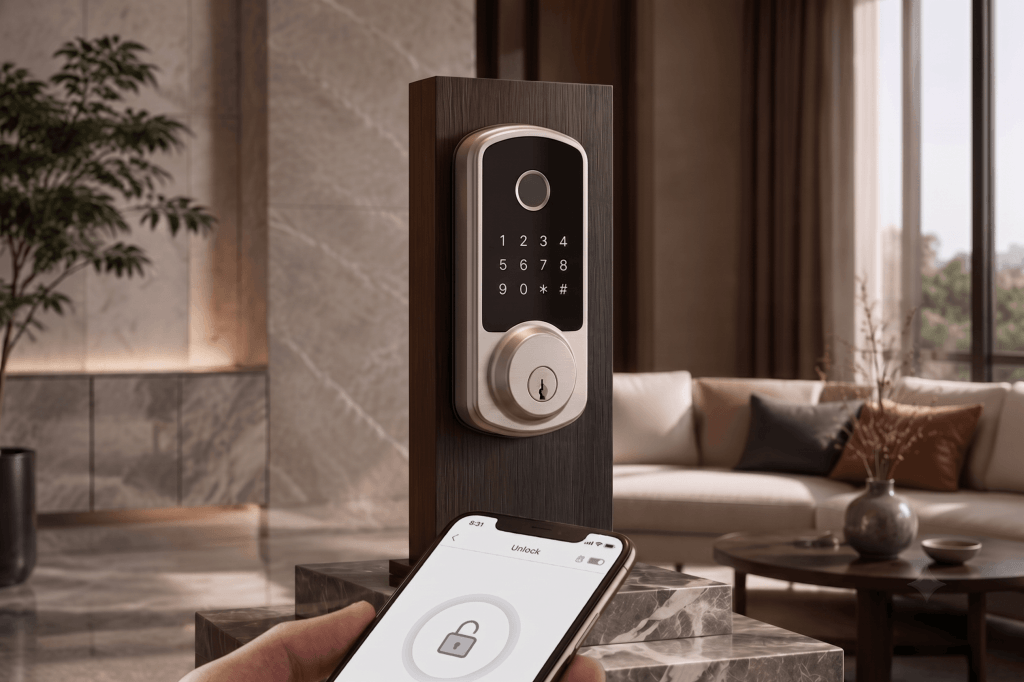
Use‑Case Selection and Implementation Across Residential, Rental, Hotel, and Office Projects
Once a buyer has shortlisted smart lock manufacturers, the next step is mapping models to specific applications. Misalignment here is a frequent source of returns and project delays.
Residential and single‑family homes
For U.S. homes, deadbolt smart locks that retrofit onto existing doors are often preferred. Biometric locks with fingerprint + PIN + app control deliver convenience without changing the door structure. Buyers should prioritize:
- Compatibility with standard U.S. deadbolt cutouts
- Support for popular smart home platforms (Alexa, Google, Apple Home)
- Simple DIY installation to reduce support calls to retailers
Rental properties and short‑term rentals
In Airbnb‑style rentals and build‑to‑rent portfolios, remote access and automation are critical. A TTLock smart lock or Tuya‑based solution enables hosts to issue temporary passcodes, monitor entry logs, and revoke access without physical keys. Implementation success metrics often include:
- Reduction in key handover time (often 50–80% compared with physical keys)
- Fewer lockouts and emergency visits
- Lower rekeying costs between tenants
Here, a KEYPLUS smart lock manufacturer that offers cloud‑based management and gateway options can support both individual hosts and large property managers.
Hotels and serviced apartments
Hotel door locks require stable RFID card access, energy‑saving switch integration, and PMS connectivity. For new‑build projects, mortise hotel locks with RFID + mobile key are usually specified. Buyers should review:
- Online/offline hotel lock system software capabilities
- Support for staff hierarchies and audit trails
- Integration with PMS or channel managers via API
Project delivery success is measured by on‑time installation, minimal room downtime, and smooth staff onboarding. Manufacturers that have delivered hundreds of hotel rooms—such as specialized brands like KEYPLUS—can usually provide sample project workflows and training materials.
Offices and access control
For offices, the focus shifts to role‑based access, time schedules, and integration with turnstiles or elevator control. Biometric locks, RFID card access, and app‑based credentials are common, often tied into a central access control platform. Buyers should ensure that the smart lock manufacturer supports:
- Multi‑door management in one dashboard
- Audit trail exports for compliance
- Integration with existing access control systems via Wiegand, TCP/IP, or APIs
Across all scenarios, implementation planning should include pilot deployments, installer training, and phased rollouts. Many distributors use a 50–100 unit pilot to validate installation time, user feedback, and app performance before committing to full building or portfolio deployment.
Sourcing Strategy, OEM/ODM, and Long‑Term Partnership Value with Smart Lock Manufacturers
By 2026, the smart lock landscape will be dominated by brands and manufacturers that combine strong hardware, mature software ecosystems, and reliable supply chains. MarketsandMarkets (2023) forecasts that cloud‑managed access control solutions will grow at over 16% CAGR, and smart locks will be a core endpoint in these systems. For importers and distributors, the goal is to lock in partnerships now with manufacturers that can evolve alongside these trends.
Balancing U.S. brands and global manufacturers
Many portfolios mix U.S. brands—Yale, Schlage, Kwikset, ASSA ABLOY subsidiaries—with global suppliers such as KEYPLUS smart lock manufacturer or other smart door lock manufacturers in China. U.S. brands often provide strong local recognition and ANSI/BHMA positioning, while export‑focused manufacturers offer flexible OEM/ODM, aggressive pricing, and rapid feature innovation (e.g., face recognition, palm vein, video intercom locks).
OEM/ODM and brand‑building
For companies building their own smart lock brands, OEM/ODM capability is essential. A manufacturer that can customize industrial design, finishes, packaging, firmware, and app branding allows distributors to differentiate in crowded markets. Low MOQs for customized models, predictable lead times, and stable component sourcing are critical to avoid stockouts during peak seasons.
Evaluating long‑term value
Procurement teams should look beyond initial unit cost and consider:
- Expected product lifecycle (years in production)
- Roadmap for new connectivity standards and integrations
- Historical on‑time delivery performance
- Warranty policies and local service options
Suppliers like KEYPLUS that focus on smart lock R&D, manufacturing, and B2B export typically maintain clear roadmaps for biometric lock development, TTLock/Tuya compatibility, and new access control features. For distributors and project buyers, aligning with such a partner can reduce technical risk and accelerate market entry, especially in fast‑growing segments like apartment access control and hospitality.
Frequently Asked Questions
What smart locks are made in the USA?
Several well‑known smart lock brands manufacture or assemble products in the U.S., including certain lines from Yale, Schlage, and Kwikset, often under larger groups such as ASSA ABLOY or Spectrum Brands. According to Statista (2023), North America accounts for roughly 35–40% of global smart lock revenue, and a portion of that volume is produced domestically while some is imported and branded locally. For B2B buyers, the key question is not only where the lock is made, but whether the manufacturer meets local standards like ANSI/BHMA, UL fire ratings (where applicable), and FCC requirements for wireless products. U.S.-made smart locks can simplify certain government or institutional tenders that specify domestic manufacturing, but many distributors successfully combine U.S. brands with global OEM/ODM partners such as KEYPLUS smart lock manufacturer to cover different price points and feature sets. When comparing U.S. and imported smart lock manufacturers, procurement teams should weigh total landed cost, certification coverage, lead times, and the strength of the app ecosystem. In many cases, a hybrid portfolio—U.S. brands for specific channels and export manufacturers for private‑label and project work—delivers the best long‑term flexibility.
Who makes smart key locks?
Smart key locks—often referring to locks with rekeyable cylinders or digital credential management—are produced by a wide range of manufacturers, from legacy mechanical lock brands to specialized smart lock manufacturers. Industry research indicates that over 200 active manufacturers globally now offer some form of smart key or digital key solution, including U.S. names like Kwikset, Schlage, and Yale, as well as global suppliers focused on OEM/ODM export. As Mark Ellison, Security Hardware Product Manager, notes: “The term ‘smart key’ has evolved from purely mechanical rekey systems to encompass app‑controlled digital credentials, RFID cards, and biometrics. What matters for buyers is how consistently the manufacturer delivers these features across a portfolio.” For distributors, the decision is less about who invented smart key technology and more about which manufacturer can provide stable, interoperable products with clear documentation and support. Buyers should evaluate whether the smart key locks they source support mobile app control, temporary PINs, audit trails, and integration with platforms like TTLock or Tuya. Manufacturers such as KEYPLUS focus on combining digital key management with traditional mechanical security, giving importers and project contractors a broad toolkit for residential, rental, and commercial deployments.
Is Kwikset American made?
Kwikset is a U.S.-based lock brand owned by Spectrum Brands, and it has a long history in the American residential lock market. However, like many global hardware brands, Kwikset sources and manufactures products through a combination of domestic and overseas facilities, depending on the specific model and product line. Publicly available industry analysis suggests that a significant portion of entry‑level and mid‑range smart locks are produced in Asia, even when branded by U.S. companies. For procurement teams, the more important point is whether a Kwikset smart lock—or any other brand—meets the required ANSI/BHMA grade, carries appropriate UL or fire door approvals if needed, and complies with FCC and RoHS requirements. Many U.S. distributors pair Kwikset and similar brands with OEM/ODM partners such as KEYPLUS smart lock manufacturer to fill gaps in biometric features, hotel lock systems, or specialized project needs. When evaluating whether to rely on Kwikset or alternative manufacturers, buyers should request detailed specifications, test reports, and clarity on where each model is produced. This ensures that tenders with local content rules or specific origin requirements are met without compromising on technology or app integration.
Is Lockin from Xiaomi?
Lockin (sometimes seen as Loock or related sub‑brands in different markets) has been associated with the Xiaomi ecosystem in China, offering smart door locks that integrate with Xiaomi’s smart home platform. These collaborations are typically ecosystem partnerships rather than Xiaomi manufacturing every device directly. Research on the Chinese smart home market from QuestMobile (2023) indicates that ecosystem‑linked brands account for more than 50% of smart lock sales in major cities, driven by app integration and bundled smart home solutions. For international buyers, the Xiaomi or Lockin relationship mainly matters if they plan to build on that ecosystem or if their customers already use Xiaomi smart home devices. Outside China, however, many distributors prefer platform‑agnostic manufacturers that support TTLock, Tuya, or proprietary cloud platforms with open APIs. This allows them to integrate smart locks with a broader range of gateways, hubs, and property management systems. When comparing ecosystem brands like Lockin with export‑focused manufacturers such as KEYPLUS, buyers should consider market fit, app language support, certification coverage, and the ability to do OEM/ODM. Ecosystem brands can be powerful in specific regions, while flexible manufacturers may be better suited for private‑label and multi‑country deployment strategies.
How do I compare smart lock manufacturers in the U.S. with smart door lock manufacturers in China?
Comparing U.S. smart lock manufacturers with smart door lock manufacturers in China requires a structured approach that looks beyond brand recognition. Research from Deloitte (2022) suggests that global sourcing strategies can reduce hardware costs by 10–25%, but only when quality, compliance, and logistics are carefully managed. U.S. manufacturers often emphasize ANSI/BHMA grading, strong local support, and brand trust, while Chinese manufacturers typically offer broader OEM/ODM options, faster feature innovation, and competitive pricing. Key comparison points include: certification coverage (CE, FCC, RoHS, ANSI/BHMA), app ecosystem (TTLock, Tuya, proprietary), documentation quality, warranty terms, and real‑world project references. Buyers should also factor in lead times, MOQs, and the manufacturer’s ability to customize hardware and firmware for local markets. For example, a Chinese supplier like KEYPLUS smart lock manufacturer may provide customized mortise locks for hotel projects, while a U.S. brand supplies deadbolt retrofit locks for retail channels. A practical strategy is to run parallel pilots: deploy a U.S. brand and an export OEM/ODM partner in similar environments, measure installation time, user feedback, and support tickets over 3–6 months, and then standardize based on data rather than assumptions. This de‑risks the decision and ensures that the chosen manufacturers align with your long‑term portfolio strategy.
What should I look for in a KEYPLUS smart lock manufacturer for OEM/ODM projects?
When evaluating a KEYPLUS smart lock manufacturer or any OEM/ODM partner, the priority is to confirm that they can deliver consistent quality at scale while supporting your brand and software roadmap. Studies on OEM partnerships in electronics, such as those summarized by McKinsey (2022), show that structured collaboration can reduce time‑to‑market by 20–30% compared with ad‑hoc supplier relationships. For OEM/ODM smart lock projects, focus on: R&D capability (biometric algorithms, app development, TTLock/Tuya integration), mechanical design expertise (mortise, deadbolt, hotel lock bodies), certification readiness (CE, FCC, RoHS, IP ratings), and flexibility in finishes, logos, and packaging. It is also important to check sample lead times, typical MOQs for customized models, and the manufacturer’s track record with long‑running product lines. For businesses ready to source smart lock solutions with stable quality and customization potential, partnering with an experienced manufacturer like KEYPLUS can reduce project risk and simplify portfolio management. A well‑structured OEM/ODM relationship allows you to build a differentiated smart lock brand, backed by mature hardware and software, while you focus on channel development and local market support.

